
Permits
Florida Building Code: A Homeowner's Remodel Guide
Florida Building Code for homeowners remodeling: current edition, what it means for kitchens, baths, windows and additions, and where to read it free.
By the Prime Construction team Updated October 13, 2026 6 min read
The Florida Building Code is the single statewide set of construction rules for every building in Florida, and the current version is the 8th Edition (2023), in effect since December 31, 2023. For a homeowner, it decides what your remodel must include to pass inspection: how plumbing and wiring are installed, how bathrooms are ventilated and waterproofed, what windows must withstand and how additions are built for wind and energy use. You can read it free online, and your city or county building department enforces it through permits and inspections.
What the Florida Building Code is
Florida adopts one code statewide, based on the International Codes with Florida-specific changes for hurricanes, heat, humidity and flooding. Cities and counties enforce it but generally do not write their own versions, which is why the same rules apply in Orlando, Kissimmee and Sanford.
The code is published in several volumes. The ones that matter for home remodels:
| Volume | What it covers in a remodel |
|---|---|
| Residential | One- and two-family homes and townhouses: rooms, egress, framing, wind design, and residential plumbing, mechanical and electrical chapters |
| Existing Building | Repairs and alterations to existing buildings, and how much of the house a project has to upgrade |
| Energy Conservation | Insulation, window performance, duct sealing, lighting and equipment efficiency |
| Plumbing, Mechanical, Fuel Gas | Detailed trade rules, used alongside the Residential volume |
| Building | Commercial and larger buildings, plus some shared rules |
| Accessibility | Public and commercial accessibility (not normally required inside a private single-family home) |
Electrical work follows the National Electrical Code edition Florida adopts with the building code. Several Central Florida building departments list the 2020 NEC alongside the 8th Edition.
Current edition and what is coming
- 8th Edition (2023): effective December 31, 2023. This is what most permits are reviewed under today.
- 9th Edition (2026): the Florida Building Commission’s workplan lists an effective date of December 31, 2026.
Which edition applies to your project generally depends on when the permit application is submitted. If your remodel will be permitted around the end of 2026, ask your contractor which edition the plans are drawn to.
Where to read the Florida Building Code for free
The Florida Building Commission runs floridabuilding.org. Its Florida Building Code Online page links to the 8th Edition (2023) and the draft 9th Edition (2026), which you can read in a web browser without buying the printed books. The commission’s code resources page also has summaries of what changed in each volume of the 8th Edition.
Tips for finding what you need:
- Start with the Residential volume for a house, or Existing Building for alterations.
- Use the table of contents rather than searching single words. Bathrooms, for example, show up under plumbing fixtures, ventilation, glazing near tubs and showers, and electrical.
- Treat what you read as background. Your building department’s plan reviewer and inspector have the final say on how a section applies to your house.
Do you have to bring the whole house up to code?
This is the most common worry, and the usual answer is no. The Existing Building volume classifies work as repairs and different levels of alterations, and the requirements generally attach to the area you are working on. Replacing a bathroom’s tile and fixtures does not normally require you to rewire the kitchen.
Situations that can trigger broader upgrades:
- Large alterations that reconfigure much of the house.
- Changing the use of a space, such as converting a garage into a bedroom.
- Substantial improvement of a home in a flood hazard area, which can require bringing the home into compliance with flood rules.
- Adding a bedroom, which brings egress and smoke alarm questions.
Raise these early, before design is final.
What the code means for a kitchen remodel
- Electrical: kitchens need dedicated small-appliance circuits for the countertops, GFCI protection at the counter receptacles, and receptacles spaced so no point along the counter wall is far from an outlet. New appliance locations often mean new circuits, which means an electrical permit.
- Range hoods: a hood vented outdoors must be ducted properly, and very high-capacity hoods can require makeup air. In Florida humidity, an outside-vented hood is the better choice anyway.
- Plumbing: moving the sink means a new drain and vent. On a slab-on-grade Central Florida home, the drain change happens in the concrete, and it is inspected before it is covered.
- Gas: moving or adding a gas range requires a permit and a pressure test.
- Walls: removing a load-bearing wall needs a properly sized beam and supports, usually with engineering.
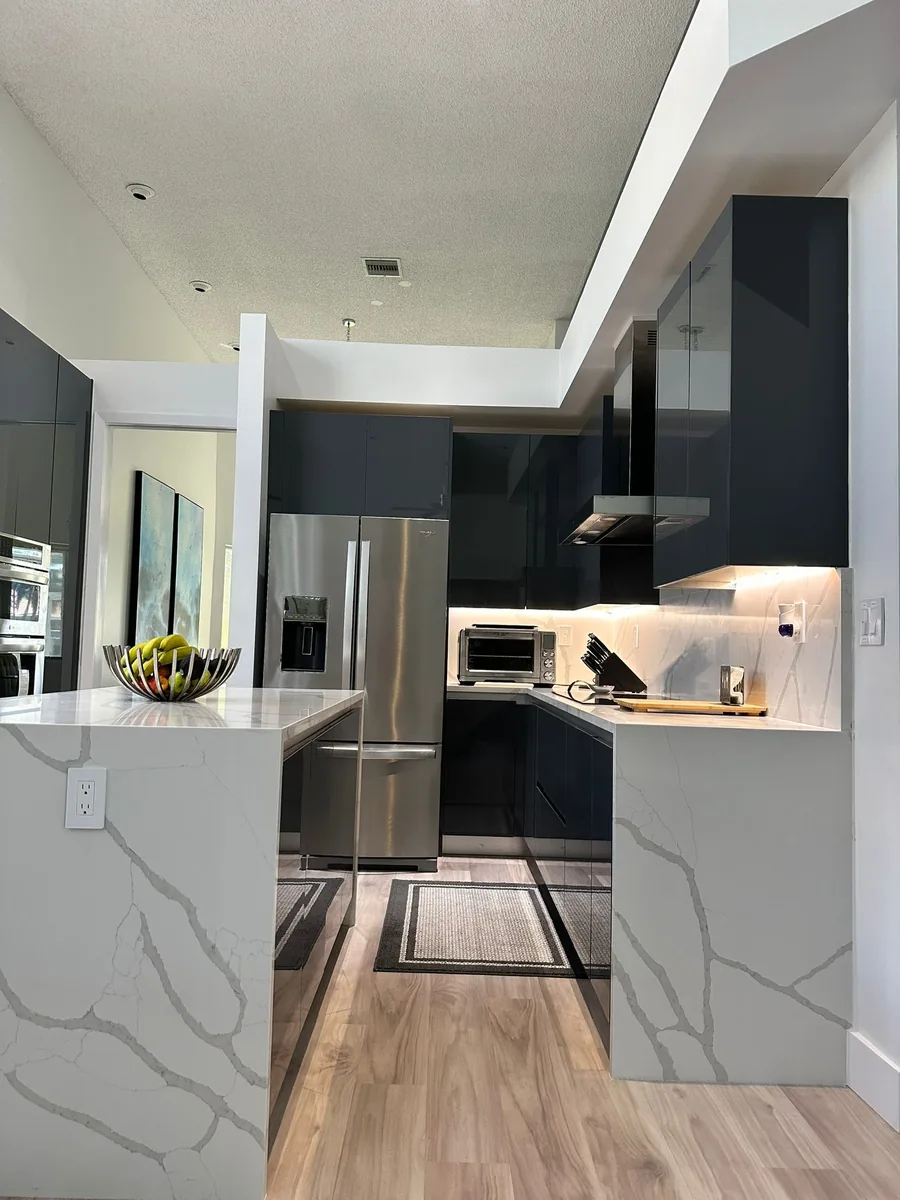
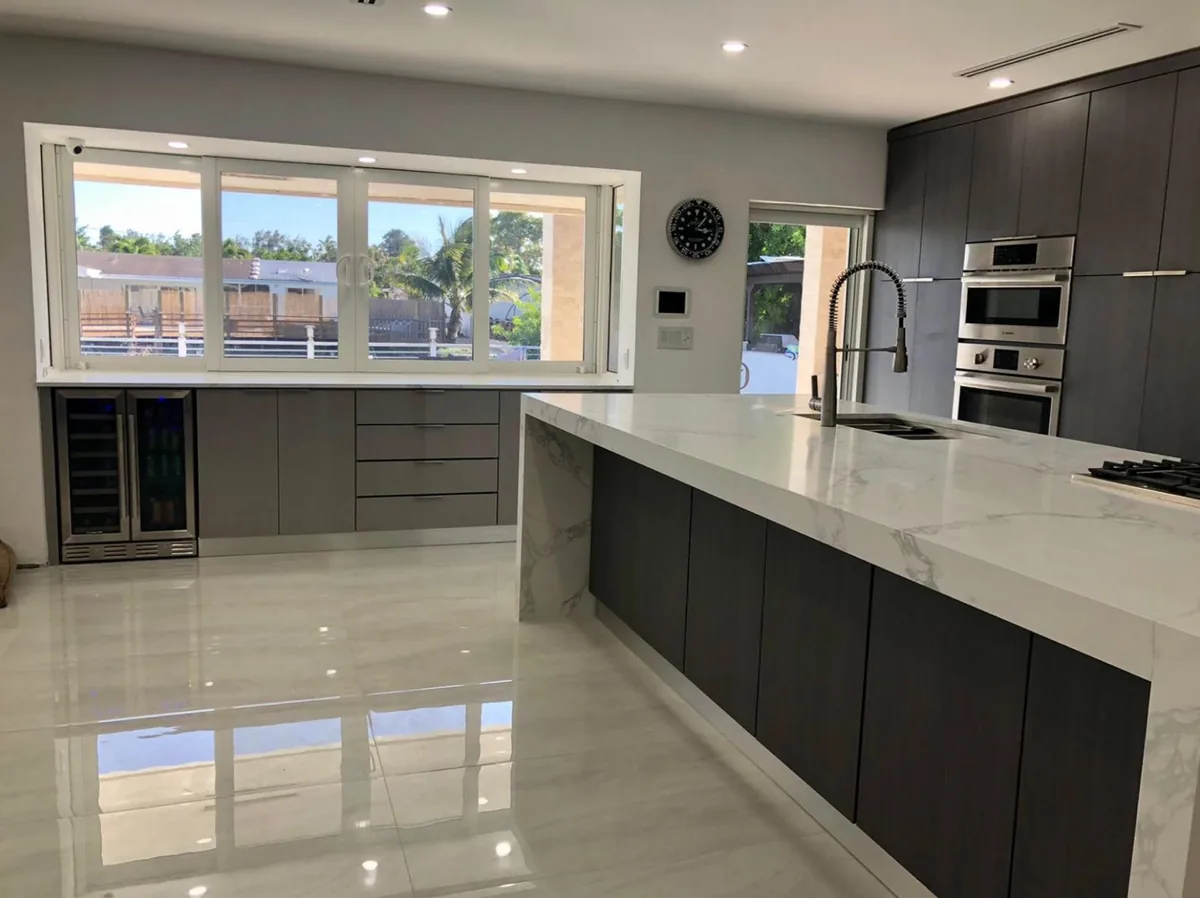
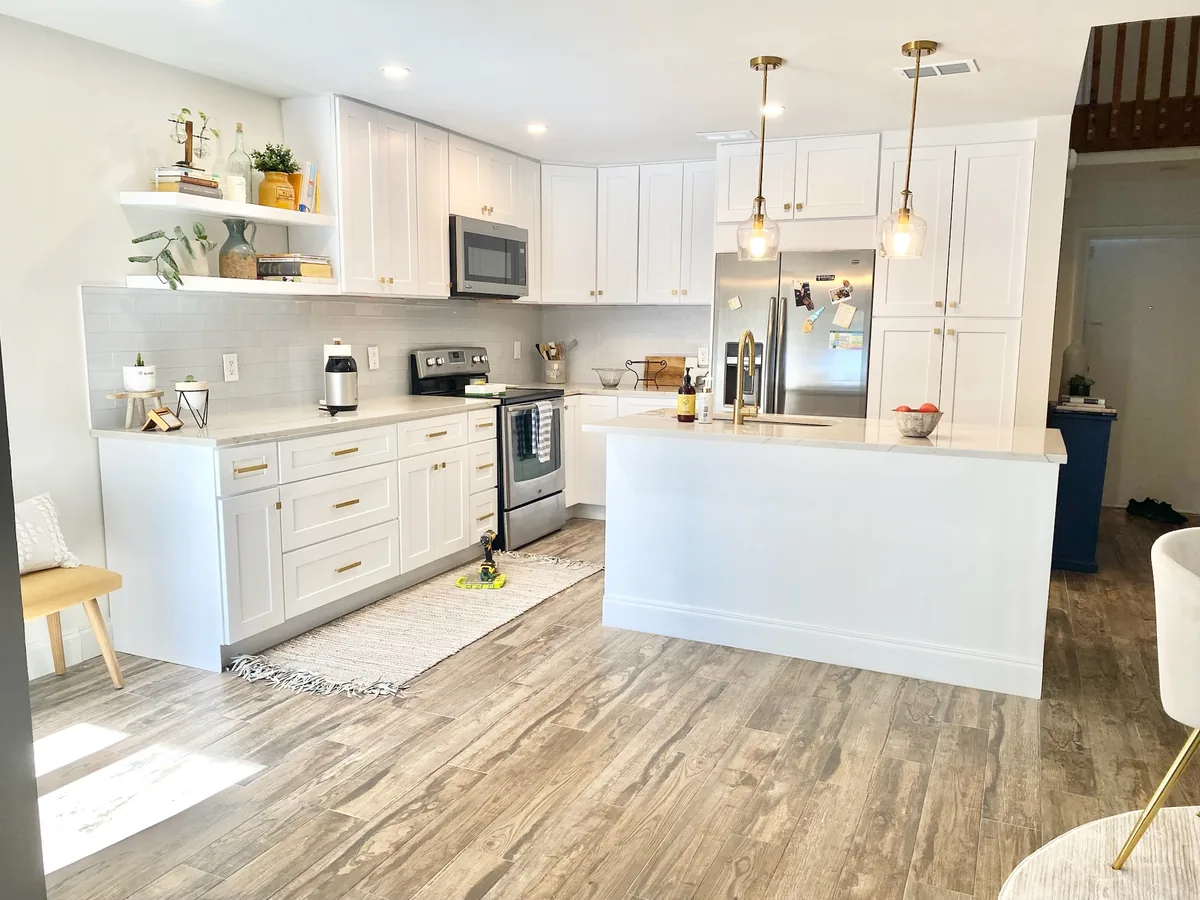
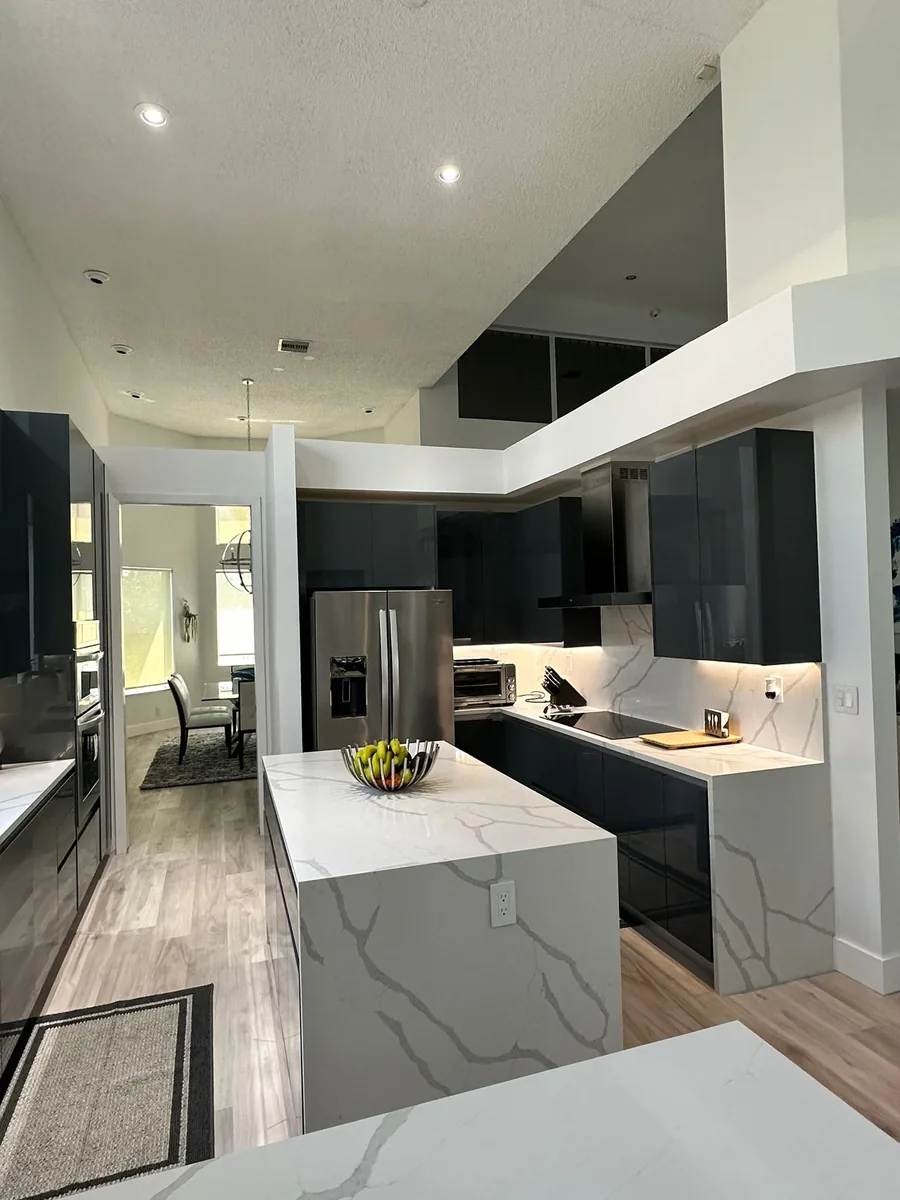
Our kitchen remodeling projects are planned around these requirements from the first measurement, so the design does not have to change at plan review.
What the code means for a bathroom remodel
- Shower size: a shower must have at least 900 square inches of floor area and be able to fit a 30 inch circle, which in practice means 30 by 30 inches minimum.
- Toilet clearances: at least 15 inches from the toilet centerline to a side wall or obstruction, and at least 21 inches of clear space in front.
- Ventilation: a bathroom needs either an openable window of adequate size or an exhaust fan vented to the outside, never just into the attic.
- Shower valves: shower and tub-shower valves must be pressure-balancing, thermostatic or a combination type, to limit scalding.
- Safety glazing: glass in shower doors and enclosures, and windows close to tubs and showers, must be safety glass.
- Waterproofing: shower pans and wall assemblies must be waterproofed and the pan is often tested before tile goes in.
- Electrical: bathroom receptacles need GFCI protection.
For more on planning a bathroom with these rules built in, see our bathroom remodeling page.
What the code means for windows and doors
Window and exterior door replacements need a permit across Central Florida. The code requirements that drive the product choice:
- Florida product approval: each window and door must have a state or local product approval, and the permit lists it.
- Design pressure: the product must be rated for the wind loads at your house, which depend on location, height and exposure.
- Impact protection: Orlando and most of Central Florida are outside the High-Velocity Hurricane Zone (Miami-Dade and Broward), and impact-rated glass is generally not required inland the way it is near the coast. Many homeowners choose impact windows anyway for storm protection, security and noise.
- Energy: new windows must meet the energy code’s performance limits, which in Florida’s hot climate focus on solar heat gain.
- Bedroom egress: a window in a sleeping room must remain a usable emergency escape opening. Do not let a replacement shrink it.
Our window replacement service covers product approvals and permits.
What the code means for an addition
An addition is new construction attached to the house, so it is built to the full current code:
- Plans and engineering: a site plan, floor plan, structural details, and usually signed and sealed truss drawings and energy calculations.
- Wind design: framing, connections, roof sheathing and openings designed for the wind speed at your site.
- Foundation: footings and slab detailed for the soil and the new loads, tied to the existing structure.
- Energy compliance: insulation, windows, ductwork and HVAC sizing documented for the new space.
- Zoning and setbacks: checked by the city or county before the building review.
- Flood rules: if the property is in a flood hazard area, elevation requirements can apply.
See our home additions page for how we handle design, engineering and permits.
Code and permits: how they connect
The code sets the rules, and the permit is how your local building department checks them. Plan review checks the drawings, and inspections check the work at rough-in and final stages. Since July 1, 2026, Florida Statutes 553.79 allows a written exemption request for some non-structural single-family work under $7,500, but trade and structural work still needs a permit, and exempt work must still meet the code. For local steps, see our guides to City of Orlando permits, Orange County building permits and Seminole County building permits.
Planning a remodel to code in Central Florida?
Prime Construction is a licensed general contractor (CGC1535686) and plumbing contractor (CFC1433952). We design remodels to the current Florida Building Code, pull the permits and stay on the job through every inspection. If you are in Orange, Seminole, Osceola or Lake County, call (407) 404-3944 or request an estimate.