
Design Ideas
Bathroom Lighting Trends for 2026: 10 Ideas Worth Using
Bathroom lighting trends for 2026: backlit mirrors, sculptural sconces, hidden LED strips, tunable white, warm metals, and which trends last.
By the Prime Construction team Updated October 13, 2026 6 min read
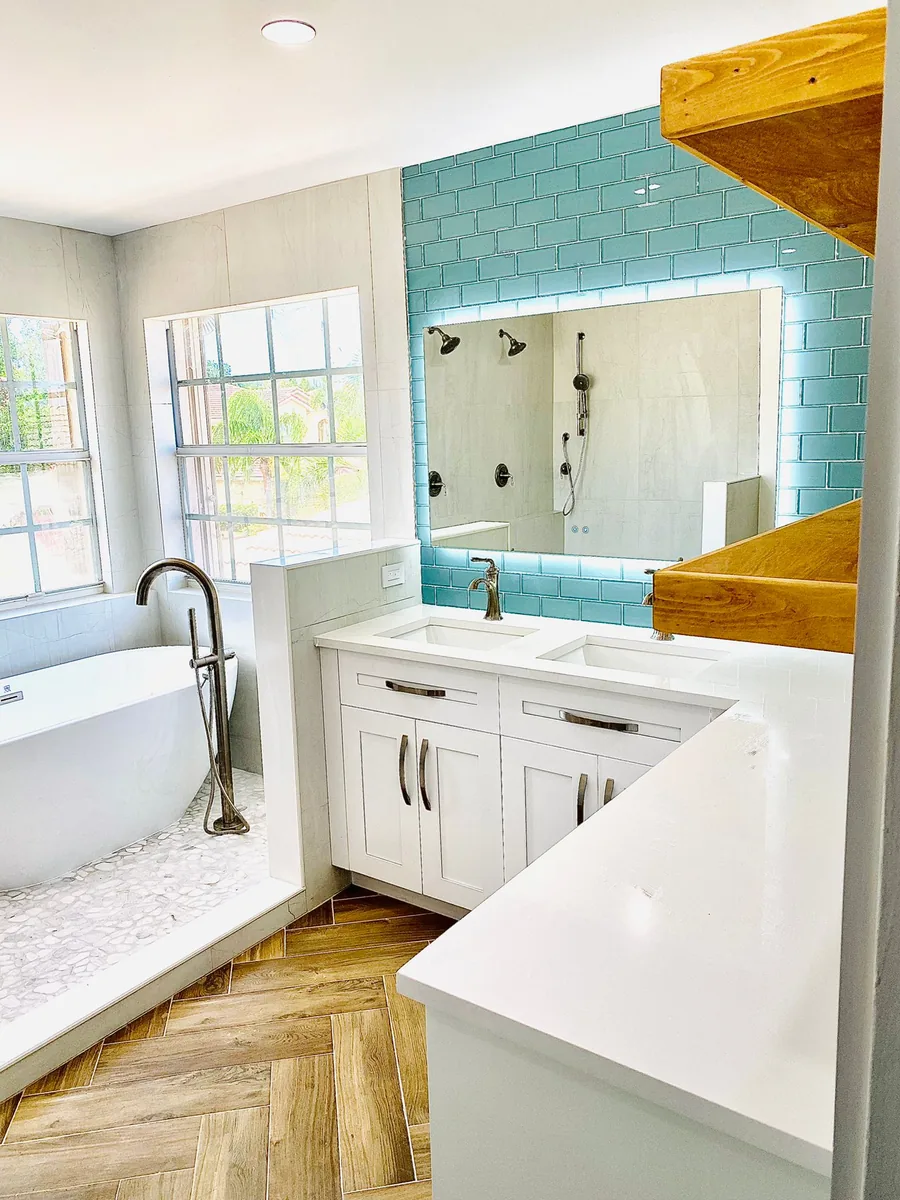
The bathroom lighting trends that matter for 2026 are mostly practical: layered lighting on separate controls, sconces and backlit mirrors that light the face evenly, hidden LED strips under vanities and in niches, warm color temperatures, and warmer metal finishes. Sculptural sconces and statement pendants are the decorative side. Below are ten trends worth considering, what each one requires, and which are likely to look dated sooner. The rules underneath them do not change: damp-rated fixtures in the room, wet-rated fixtures in the shower, vanity light at roughly face height, and licensed electrical work for anything new.
1. Layered lighting on separate controls
The biggest shift is away from one overhead light and toward three layers: ambient light from the ceiling, task light at the mirror, and accent or night light. Each layer gets its own switch or dimmer so the room can be bright in the morning and soft at night.
- What it takes: usually more than one switch leg, and sometimes new boxes. In a remodel this is simple; in a finished bathroom it means opening walls.
- Will it last? Yes. This is good lighting practice, not a fashion.
For the full layering plan with placement rules, see our bathroom lighting design ideas.
2. Backlit and lighted mirrors
Mirrors with LED lighting around the edge or behind the glass give very even face lighting and look clean in modern bathrooms. Many include a dimmer, adjustable color temperature or an anti-fog pad.
- Buying criteria: damp-location rating, CRI 90+, a stated color temperature, and whether it is hardwired or plug-in. Hardwired mirrors need the box in the right place behind the mirror.
- Will it last? Likely, because it solves a real problem. Choose one with replaceable drivers if possible.
3. Sconces flanking the mirror
Sconces on both sides of the mirror at roughly face height (commonly 60 to 66 inches from the floor) are replacing the long bar above the mirror in many remodels. They remove the shadows a single overhead light causes.
- What it takes: two wall boxes about 36 to 40 inches apart, which usually means new wiring if you had a bar.
- Will it last? Yes. It is the most functional vanity layout.
4. Sculptural and artistic sconces
Asymmetrical shapes, globe and pill-shaped glass, fluted glass and plaster-look shades turn sconces into decoration.
- Watch for: exposed bulbs and clear glass at the mirror glare and cast harsh light. Pick diffused glass if the sconce is your task light.
- Will it last? The specific shapes will change. Since a sconce is easy to replace on an existing box, this is a fine place to follow a trend.
5. Hidden LED strips
Low-profile LED strips tucked under a floating vanity, inside a shower niche, along a ceiling cove or behind a mirror give soft indirect light. A toe-kick strip doubles as a night light.
- What it takes: a low-voltage driver in an accessible spot, a damp or wet rating depending on location (a niche inside the shower needs wet-rated components), and planning before tile goes up.
- Will it last? Yes, especially under-vanity and niche lighting, which are useful every night.
6. Warm color temperatures
Warm white (2700K) and soft white (3000K) are the norm in current bathroom design, replacing the bright 5000K daylight bulbs that were common when LEDs first spread. Neutral 3500K to 4000K is still used at vanities for detailed grooming.
- The key detail: CRI 90+ at the vanity, and one color temperature for the whole room.
- Will it last? Yes. Our warm white bathroom guide explains how to choose.
7. Tunable white and smart controls
Tunable-white fixtures shift between warm and cool from a control, and smart switches or dimmers allow scenes, schedules and voice control. Motion-activated night lighting is a practical version.
- What it takes: fixtures and controls that are compatible with each other, and a neutral wire at the switch for many smart switches.
- Will it last? Smart controls are evolving quickly. Use them where they help (dimming, night lighting, the vanity) and keep a normal wall switch working for guests.
8. Warm metals and mixed finishes
Brushed brass and gold tones, bronze and matte black sit alongside the long-running brushed nickel and chrome. Mixing two finishes, such as brass sconces with nickel faucets, is common.
- Rule of thumb: keep it to two metals and use each consistently.
- Will it last? Brushed nickel is the long-term safe choice; brass and black are more trend-driven. See our guide to brushed nickel bathroom light fixtures for how that finish compares.
9. Statement pendants and chandeliers
A pendant or small chandelier over the center of a large primary bath or beside a freestanding tub adds a focal point.
- The code rule: hanging fixtures must stay out of the zone 3 feet horizontally and 8 feet vertically from the top of a tub rim or shower threshold. In many homes with 8 to 9 foot ceilings, that means the fixture goes in the center of the room, not over the tub.
- Will it last? The idea yes; the specific fixture style is easy to change later.
10. Natural materials and organic shapes
Wood, rattan-look, linen-look shades and stone or plaster-look finishes soften modern bathrooms. White and soft opal glass also fit this look; our white bathroom lighting guide covers those fixtures.
- Watch for: natural materials need a damp-location rating and a finish sealed against humidity. In Florida bathrooms, untreated natural fibers and wood can warp or grow mildew.
- Will it last? Moderately. Choose it for one fixture rather than the whole room.
Trends to skip or use carefully
- Recessed lights directly over the mirror. They look neat on a plan but cast shadows on the face.
- Bare bulbs at the vanity. Decorative, but glare in the mirror.
- Very cool daylight bulbs in a bathroom with white tile. The room looks clinical.
- Mixing color temperatures from different fixtures and bulb packs.
- Decorative fixtures with no location rating in a humid bathroom.
The rules every trend still follows
Whatever look you choose, the basics stay the same:
- Damp vs wet ratings: damp-rated fixtures for the bathroom; wet-rated for anything inside the shower or that can be sprayed.
- Vanity placement: light at roughly face height on both sides of the mirror, or above it.
- Light quality: CRI 90+ at the vanity and one color temperature.
- GFCI protection for bathroom receptacles.
- Permits and licensed work: new circuits, new fixture locations and added recessed lights need a permit and a licensed electrician.
- Ventilation: in a humid climate like Orlando’s, a properly vented exhaust fan protects every fixture and finish.
Putting trends into a remodel
Most of these trends depend on where boxes, drivers and switches sit, so they are easiest to add during a bathroom remodel, when walls are open. A lit niche, for example, has to be planned before tile goes up in a new walk-in shower. We draw lighting into the 3D rendering along with the vanity and tile so you can see how a trend looks in your room before you commit to it.
Planning a bathroom remodel in Orlando?
If you are in Orange, Seminole, Osceola or Lake County, including Windermere and Dr. Phillips, Prime Construction measures your bathroom, shows the plan in a 3D design rendering and handles permits as the licensed contractor. Call (407) 404-3944 or request an estimate.