
Bathroom
Warm White Bathroom Lighting: Which Kelvin to Choose
Warm white bathroom guide: 2700K vs 3000K vs 4000K, CRI 90+ for the vanity, where warm light works, and how to make a white bathroom feel warm.
By the Prime Construction team Updated October 13, 2026 7 min read
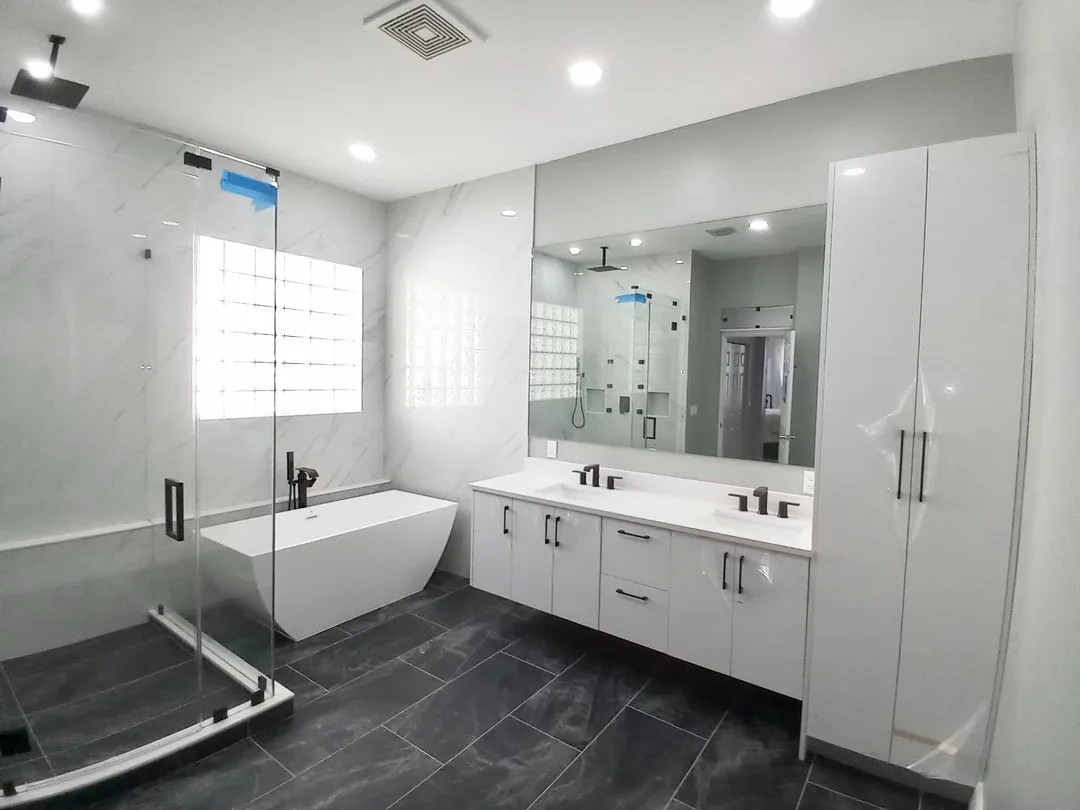
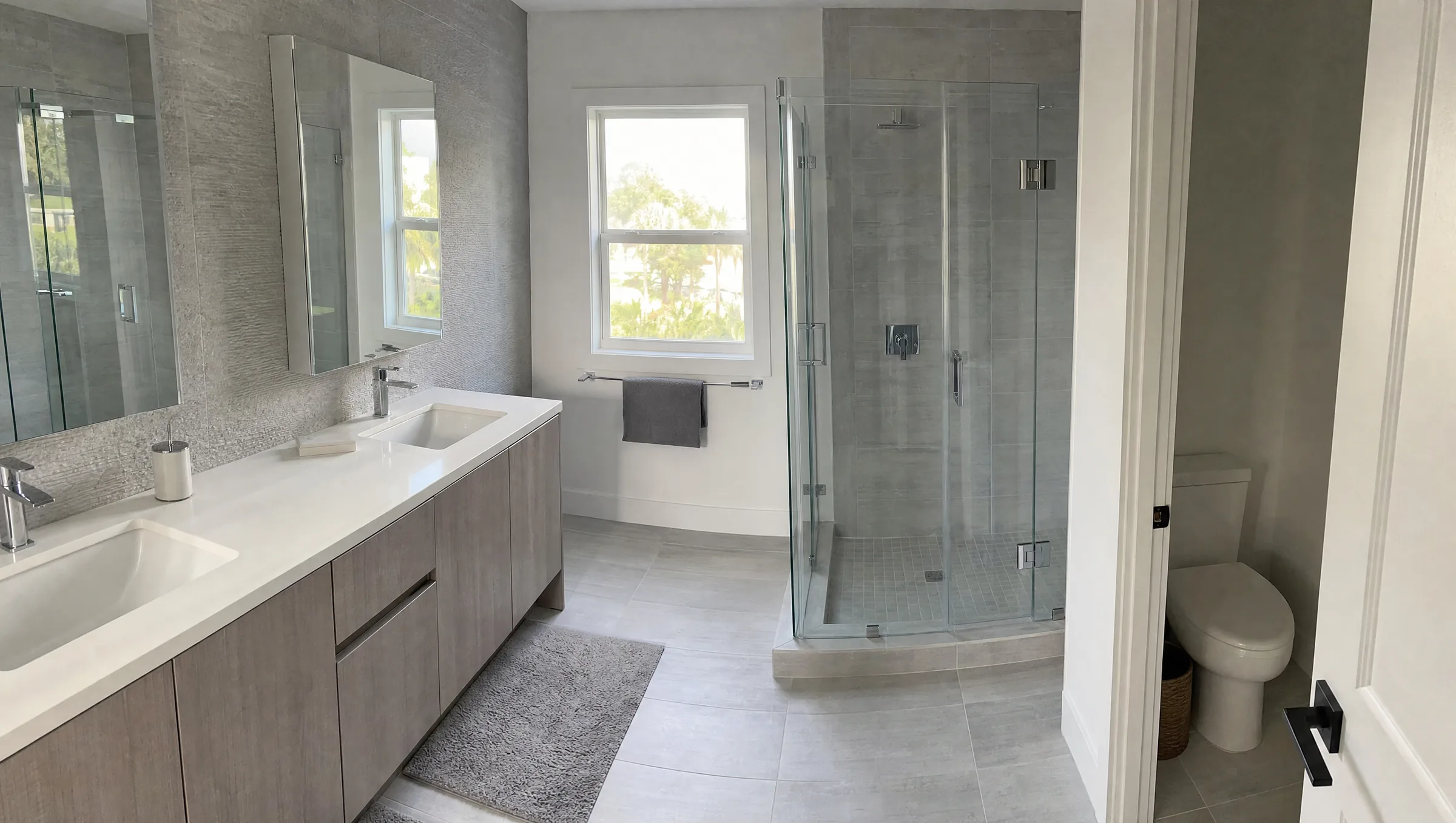
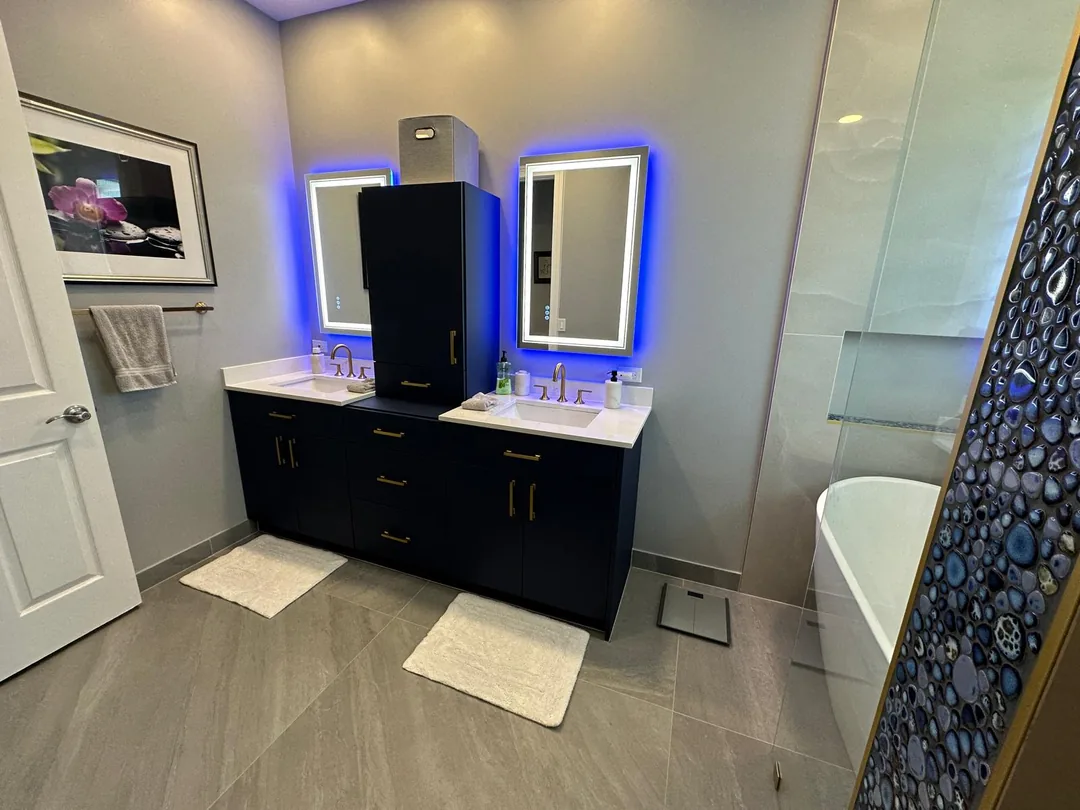
A warm white bathroom uses light in the 2700K to 3000K range, which gives a soft, slightly golden glow that is flattering on skin and feels relaxed in the evening. For most homes, 3000K is the best single choice for a bathroom, with 2700K for a cozier feel and 3500K to 4000K if you prefer a crisper vanity light. The other number that matters just as much is CRI: choose 90 or higher at the mirror so colors look true. Below is how to choose, where warm light works, and how to make a white bathroom feel warm instead of cold.
Color temperature basics: what the Kelvin numbers mean
Color temperature is measured in kelvin (K). Lower numbers look warmer and more yellow; higher numbers look cooler and more blue. The labels on bulb boxes and fixture spec sheets usually fall into these bands:
| Kelvin | Common label | How it looks in a bathroom | Best use |
|---|---|---|---|
| 2700K | Warm white | Soft, golden, similar to an old incandescent bulb | Primary baths used for relaxing, powder rooms, night lighting |
| 3000K | Soft white | Warm but cleaner, less yellow | The safe default for most bathrooms, including the vanity |
| 3500K to 4000K | Neutral or cool white | Crisp, bright, close to white | Vanities used for makeup or shaving, modern bathrooms with white tile |
| 5000K | Daylight | Bluish white, very bright | Garages and workshops; usually feels clinical in a bathroom |
Two practical rules come out of this table:
- Pick one temperature for the room. Mixing a 2700K ceiling light with a 4000K vanity bar makes one of them look wrong, and it shows in mirrors and on white tile.
- Match the rest of the house. If your bedroom and hallway run 2700K or 3000K, a 5000K bathroom feels like walking into a different building.
Warm white vs cool white in a bathroom
Most homeowners asking about a warm white bathroom are deciding between a cozy 2700K and a brighter cool white. Here is the honest trade-off.
Warm white (2700K to 3000K)
- Flattering on skin and calming at night.
- Makes cream, beige, wood and warm stone look rich.
- Can make a stark blue-white tile look slightly yellow.
Neutral to cool white (3500K to 4000K)
- Reads as clean and bright, which many people like in a modern white bathroom.
- Easier for detailed grooming if the bulbs also have good CRI.
- Can feel harsh at night, especially in a small room with lots of glossy tile.
If you cannot decide, 3000K at a high CRI on a dimmer covers almost every situation. It is warm enough for evenings and clear enough for mornings.
Why CRI matters as much as Kelvin
Kelvin tells you the color of the light. CRI (color rendering index) tells you how accurately that light shows other colors. A 3000K bulb with a CRI of 80 can make skin look flat or slightly gray, while the same 3000K at CRI 90+ looks natural.
What we recommend when selecting bulbs or integrated LED fixtures:
- CRI 90 or higher for vanity lighting. This is where you check makeup, skin and hair color.
- CRI 80+ is acceptable for a closet, a toilet room or a general ceiling light, though matching the vanity at 90+ keeps everything consistent.
- Check the spec sheet, not the box art. Look for the CRI number (sometimes shown as Ra) on the fixture specifications.
The ENERGY STAR lighting guidance is a useful neutral reference for how to read bulb labels and pick efficient LEDs.
Where warm white works best in a bathroom
Warm light does not have to be all or nothing. Think about each light by its job:
- Ceiling or recessed lights (ambient): 3000K is a good default. In a large primary bath with a soaking tub, 2700K feels softer.
- Vanity sconces or a bar (task): 3000K at CRI 90+ for most people; 3500K to 4000K if you do detailed makeup and like a brighter look.
- Shower lights: match the ceiling. A recessed light inside the shower must carry a wet-location rating.
- Night lights and toe-kick strips: 2700K or warmer. Low, warm light at night is easier on the eyes than a full overhead switch.
- Accent lights in niches or coves: usually 2700K to 3000K so the glow looks intentional, not like a mistake.
If you want both moods from the same fixtures, ask about tunable-white LED fixtures, which let you shift the color temperature from a wall control. They cost more and need compatible controls, so we usually reserve them for the vanity.
How to make a white bathroom feel warm
White bathrooms are popular because they look clean and make small rooms feel larger. The risk is that white tile, white paint and a cool bulb add up to a cold room. Lighting fixes half of that. Materials fix the rest.
Choose a warmer white
Whites have undertones. A white with a hint of cream or beige reads warmer under 2700K to 3000K light than a white with a blue or gray undertone. Test paint samples on the wall under your actual bulbs, at night as well as in daylight.
Add natural or natural-looking materials
- A wood or wood-look vanity front, or open shelving in a warm finish.
- Porcelain tile with a warm stone or wood look on the floor.
- A quartz or marble-look top with warm veining instead of gray.
Pick warm metals
Brushed nickel, brushed brass and bronze tones pick up warm light nicely. Polished chrome looks cooler. You can mix one warm metal with one neutral metal if they appear in different places (for example, brass sconces and nickel faucets), but keep the count to two. Our brushed nickel bathroom light fixtures guide covers how that finish behaves in a humid Florida bathroom.
Use texture
Handmade-look subway tile, a fluted vanity, linen-look towels and a textured shower curtain or glass all soften a white room. Texture catches warm light and keeps the room from looking flat.
Choosing bulbs and fixtures for a warm white bathroom
When you shop for fixtures, these are the specifications that matter, regardless of style:
- Color temperature: stated in kelvin. Choose one value for the room.
- CRI: 90+ for the vanity.
- Brightness in lumens, not watts. A common planning guideline for a bathroom is about 70 to 80 lumens per square foot in total, with most of it concentrated at the vanity.
- Location rating: damp-location rated fixtures for the general bathroom; wet-location rated for anything inside the shower or that can be hit by spray.
- Dimmer compatibility: LED fixtures and bulbs need a dimmer designed for LED loads, or they flicker and buzz.
- Integrated LED vs replaceable bulbs: integrated fixtures look sleek but the whole fixture is replaced when the LED fails; bulb-based fixtures let you change color temperature later.
Common mistakes with warm white lighting
- Only one ceiling light. A single overhead light, however warm, casts shadows under the eyes and chin at the mirror. Add vanity lighting at face height on both sides of the mirror, or a fixture above it.
- Mixing temperatures. Leftover bulbs from different packs are the most common cause of a bathroom that looks “off”.
- Too warm and too dim. 2700K at low output feels gloomy. Warmth needs enough lumens.
- Ignoring the mirror and tile. Glossy white tile and big mirrors amplify every flaw in the light. Matte or honed finishes are more forgiving.
- Swapping fixtures without checking the box behind them. A heavier fixture or a new location may need a new box or wiring, and that is electrician work.
For more layout and fixture ideas, see our bathroom lighting design ideas and our guide to white bathroom lighting fixtures.
Lighting during a bathroom remodel
The cheapest time to get lighting right is during a remodel, when walls and ceilings are open. That is when you can add recessed lights over the shower, move a vanity box to put sconces at face height, put a dimmer on its own switch leg, or add a toe-kick strip. Any new circuit, new fixture location or wiring change in a bathroom needs a permit and a licensed electrician, and bathroom receptacles must be GFCI protected.
In Orlando-area homes, humidity is the other reason to plan carefully. A properly vented exhaust fan protects fixtures and finishes, and damp-rated fixtures hold up better than ones built for dry rooms. When we plan a bathroom remodel, lighting and ventilation are drawn into the 3D rendering along with the vanity, so you can see placement before anything is ordered.
Planning a bathroom remodel in Orlando?
If you are in Orange, Seminole, Osceola or Lake County, including Winter Park, and want help choosing lighting as part of a bathroom remodel, Prime Construction measures your space and shows the plan in a 3D design rendering before you commit. Call (407) 404-3944 or request an estimate.