
Countertops
What Is Quartz Stone? Natural vs Engineered Quartz
Quartz stone explained: the natural mineral vs engineered quartz countertops, how they are made, pros and cons, quartz vs quartzite, care and Orlando cost.
By the Prime Construction team Updated October 13, 2026 5 min read
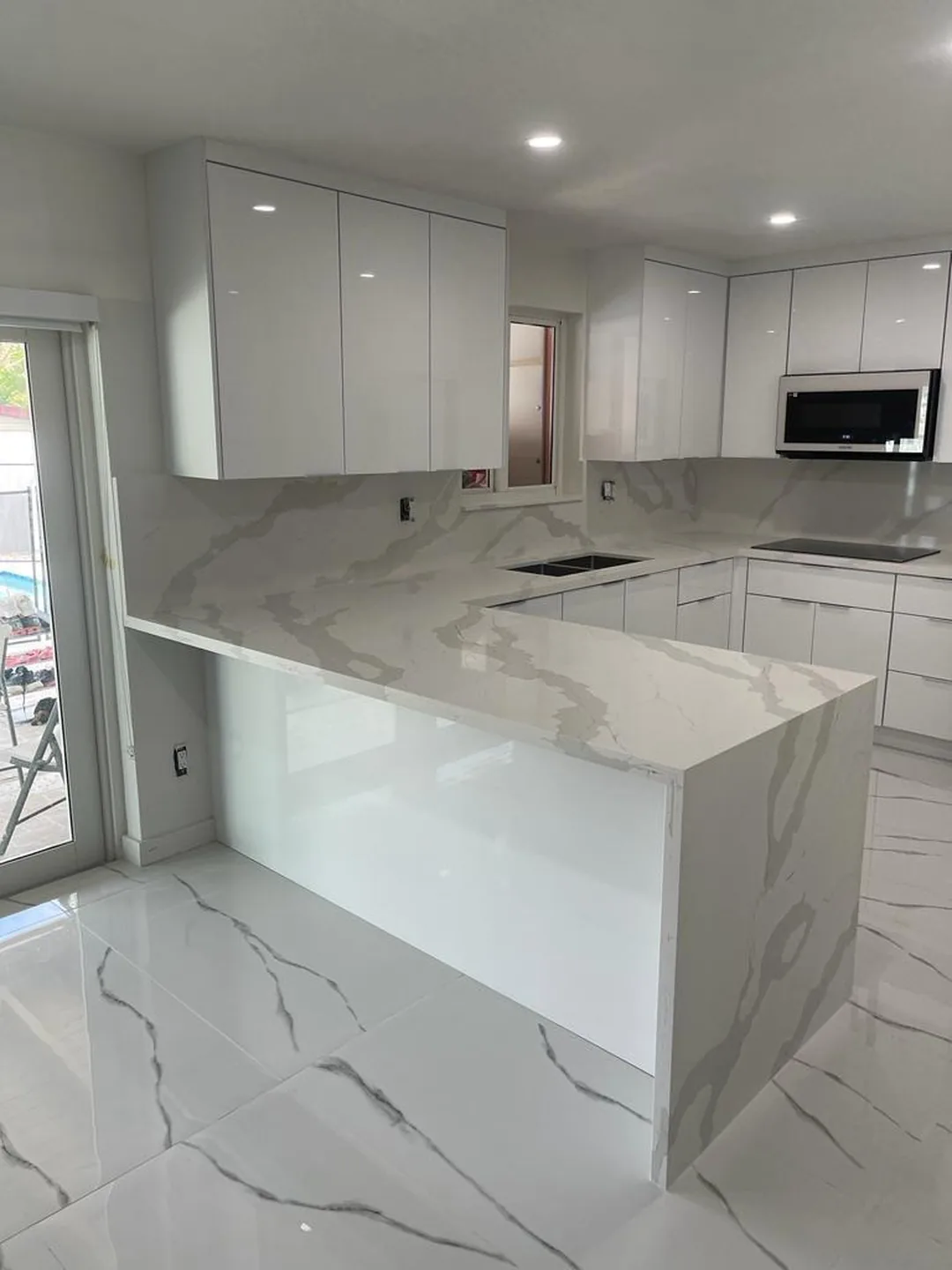
Quartz stone means two different things. Natural quartz is one of the most common minerals on Earth, a hard crystal made of silicon dioxide. The quartz stone used for countertops is engineered: crushed natural quartz, usually around 90 percent of the slab by weight, bound with resin and pigments and pressed into slabs. So yes, quartz countertops are man-made, but from a natural mineral. Below we explain the difference, how engineered quartz is made, its real pros and cons, and how it compares with quartzite and granite.
Natural quartz: the mineral
Natural quartz is a crystalline mineral made of silicon and oxygen (silicon dioxide). It is found in many rocks, including granite and sandstone, and it is hard: it rates 7 on the Mohs hardness scale, harder than steel knife blades.
Some natural quartz varieties are familiar as gemstones or decorative stones: clear rock crystal, purple amethyst, yellow citrine, rose quartz and smoky quartz. These are rarely used as countertops on their own, because large, solid slabs of pure quartz crystal do not occur in useful sizes. When a natural rock with lots of quartz is used for countertops, it is usually granite or quartzite.
Engineered quartz: the countertop material
Engineered quartz (often called quartz surfacing or engineered stone) is made in a factory:
- Crushing. Natural quartz is crushed into particles ranging from fine powder to small chips.
- Mixing. The quartz is blended with polymer resin and pigments. Some products add glass or metallic flecks.
- Pressing. The mix is compacted under vacuum and vibration into slabs, which removes air pockets.
- Curing. Slabs are heat-cured so the resin hardens.
- Finishing. Slabs are ground to thickness and polished, honed or textured.
The result is a dense, non-porous slab with consistent color and pattern from one slab to the next. Manufacturers can make it look like white marble, concrete, solid colors or speckled stone.
Quartz stone pros and cons
| Pros | Cons |
|---|---|
| Non-porous; no sealing needed | Resin can scorch or discolor from direct heat |
| Resists stains from coffee, wine, oil | Not rated for outdoor use; sunlight can fade or yellow it |
| Hard and scratch resistant for daily use | Edges and corners can chip from hard impacts |
| Consistent color and pattern | Marble-look patterns can look repetitive compared with real stone |
| Wide range of colors and finishes | Seams are visible on long runs and L-shapes |
| Low maintenance | Cost is in the mid to upper range of countertop materials |
Quartz vs quartzite vs granite
| Engineered quartz | Quartzite | Granite | |
|---|---|---|---|
| What it is | Crushed quartz plus resin, made in a factory | Natural metamorphic rock (sandstone changed by heat and pressure) | Natural igneous rock |
| Sealing | Not needed | Usually needed | Usually needed |
| Heat | Use trivets; resin can scorch | Handles heat well | Handles heat well |
| Look | Consistent; many marble looks | Natural veining, often marble-like | Natural speckles and movement |
| Installed cost (Orlando, 2026) | About $60 to $120 per sq ft | About $80 to $200+ per sq ft | About $50 to $100 per sq ft |
Quartzite is often confused with quartz because of the name, and some sellers mislabel soft marble as quartzite. Ask to see the slab and, if in doubt, ask for a scratch test on a sample. For a closer look at the two most common choices, see our quartz vs granite comparison.
Finishes and thickness
- Polished: glossy, the most common, shows fewer fingerprints than you might expect.
- Honed or matte: softer, more natural look; can show oily fingerprints and needs a little more wiping.
- Textured or leathered: a slightly rough surface, often on concrete-look colors.
- Thickness: 2 cm (about 3/4 inch) and 3 cm (about 1 1/4 inch) are standard. 3 cm is the usual choice for kitchens; 2 cm is common for vanities, backsplashes and wall panels, sometimes with a built-up edge.
Where quartz works best
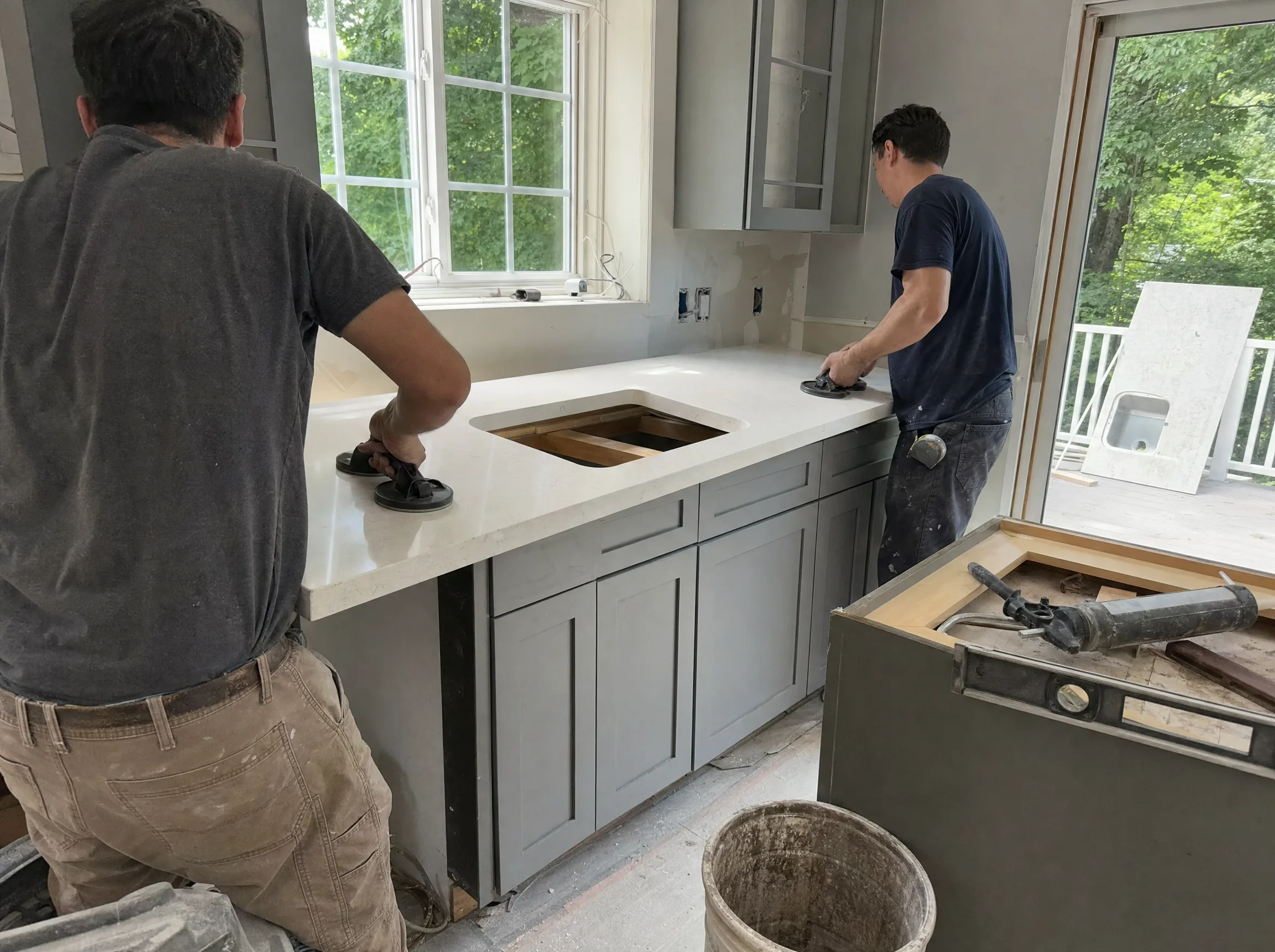
- Kitchen countertops and islands. The main use. See our countertop installation page for how we template, fabricate and install.
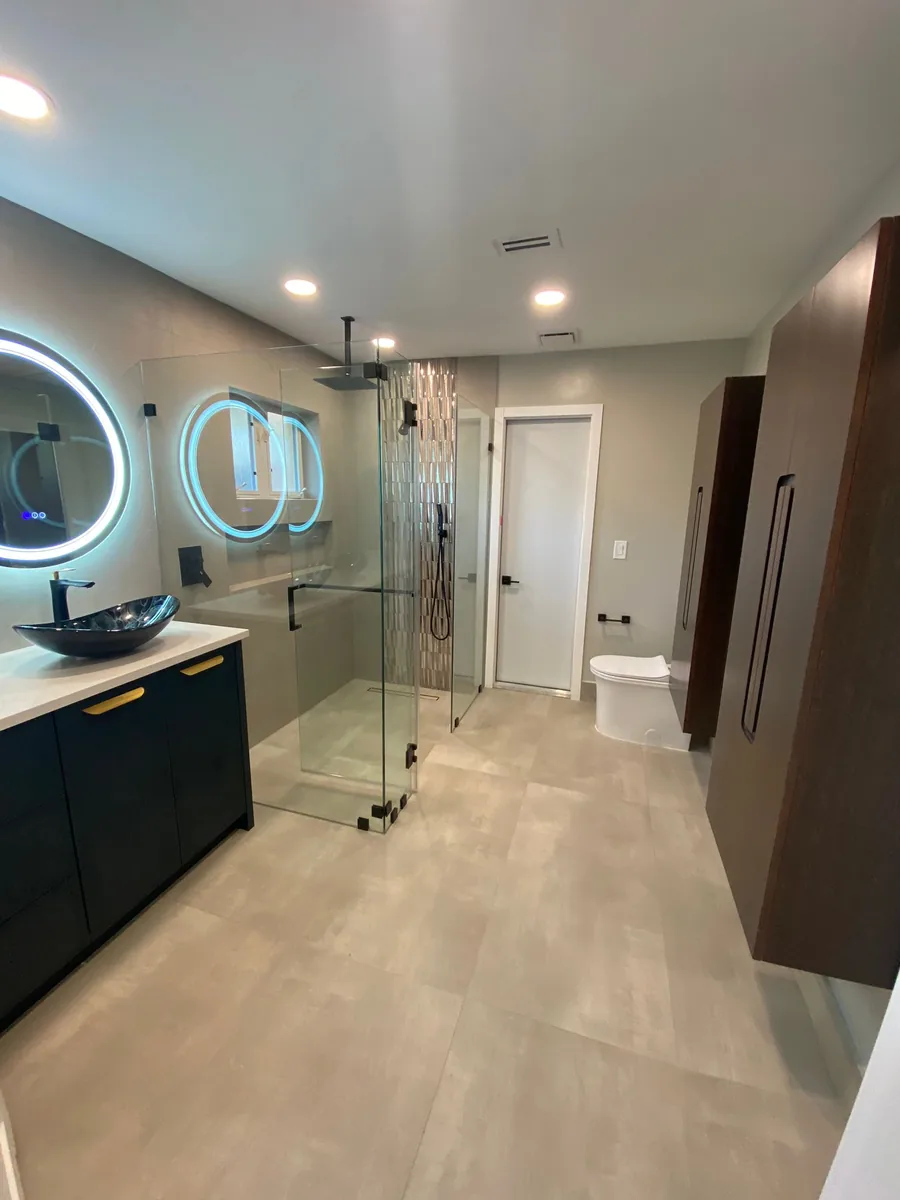
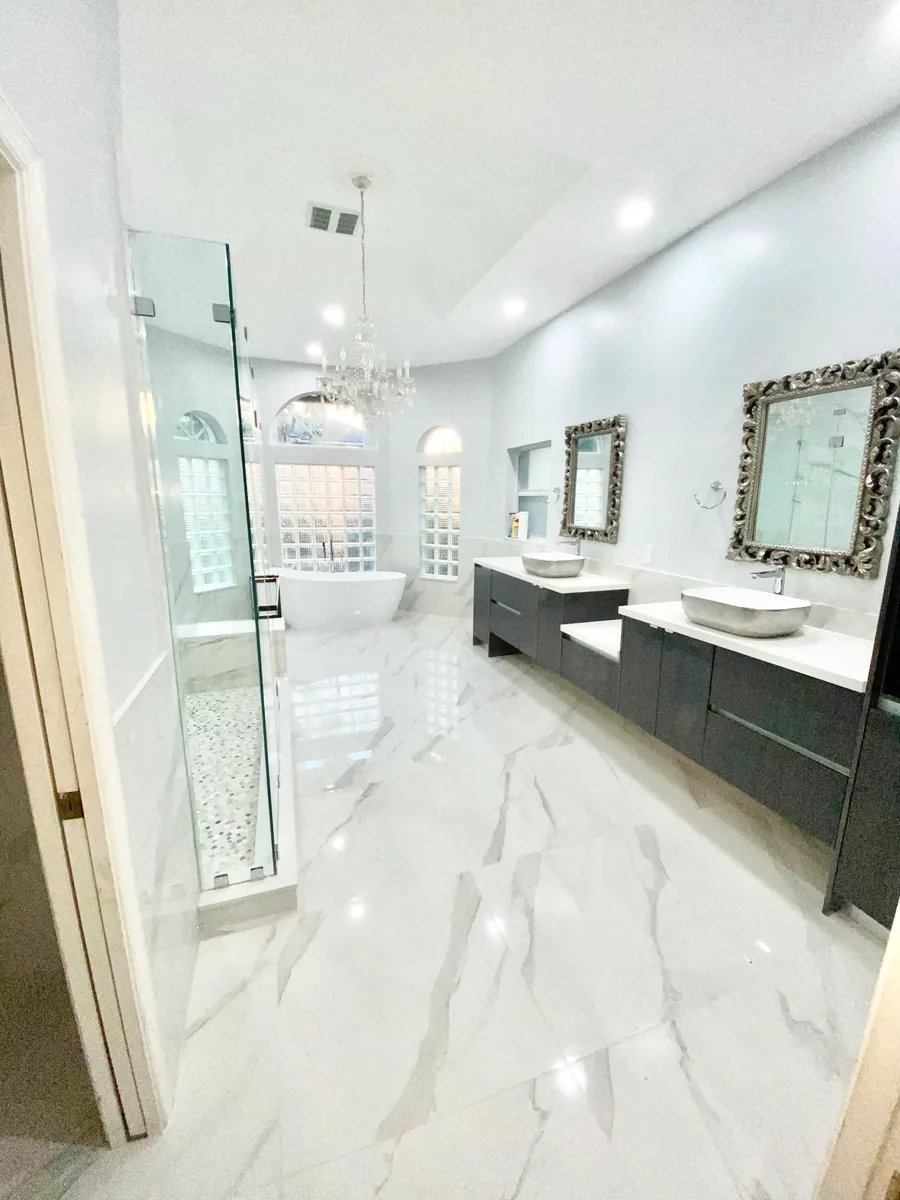
- Bathroom vanity tops. Quartz is a strong choice in a bathroom because it is non-porous. Our guide to quartz bathroom countertops covers sizes, sinks and edges.
- Backsplashes and full-height slab walls.
- Shower walls and benches, with a fabricator who has experience in wet areas.
- Not outdoors. Sunlight and heat can fade or discolor the resin, so outdoor kitchens in Florida call for granite, porcelain or other UV-stable materials.
Care and maintenance
- Wipe daily with warm water and mild dish soap, or a cleaner labeled safe for quartz.
- Avoid bleach, oven cleaner, paint strippers and harsh high-pH or high-acid cleaners, which can dull or discolor the resin.
- Use trivets for hot pans and a cutting board for knives.
- Scrape dried food or paint gently with a plastic putty knife.
- No sealing, ever.
A safety note on cutting quartz
Installed quartz countertops are safe in your home. The hazard is in fabrication: cutting, grinding and polishing engineered stone releases respirable crystalline silica dust, which can cause serious lung disease in workers. Fabrication shops are required to control that dust under federal workplace rules; see OSHA’s crystalline silica page for details. For homeowners, the takeaway is simple: do not dry-cut or grind quartz yourself. Any on-site cutting should be done wet or with dust extraction by an experienced installer.
What quartz costs in Orlando
Typical Orlando-area planning ranges for 2026, installed: about $60 to $120 per square foot for quartz. A typical 40 to 60 square foot kitchen runs about $3,000 to $7,000. What moves the number:
- Color and pattern. Plain colors cost less than bold marble-look veining.
- Thickness and edge profile.
- Cutouts for undermount sinks and cooktops.
- Seams and layout. Large islands or long L-shapes may need extra slabs.
- Tear-out of old tops and any cabinet repairs.
Quartz is one of the most common upgrades in a kitchen remodel, and a written estimate after measuring is the only real number.
Planning a quartz countertop in Orlando?
If you are in Orange, Seminole, Osceola or Lake County and want to compare quartz colors with your cabinets, Prime Construction measures your kitchen and shows your options in a 3D design rendering before you choose a slab. Call (407) 404-3944 or request an estimate.