
Cost Guides
Shower Demolition Cost: What It Takes to Demo a Shower
Shower demolition cost in Orlando for 2026: $800 to $2,500 for most tile showers, what drives the price, DIY vs pro, disposal and what hides behind tile.
By the Prime Construction team Updated October 13, 2026 9 min read
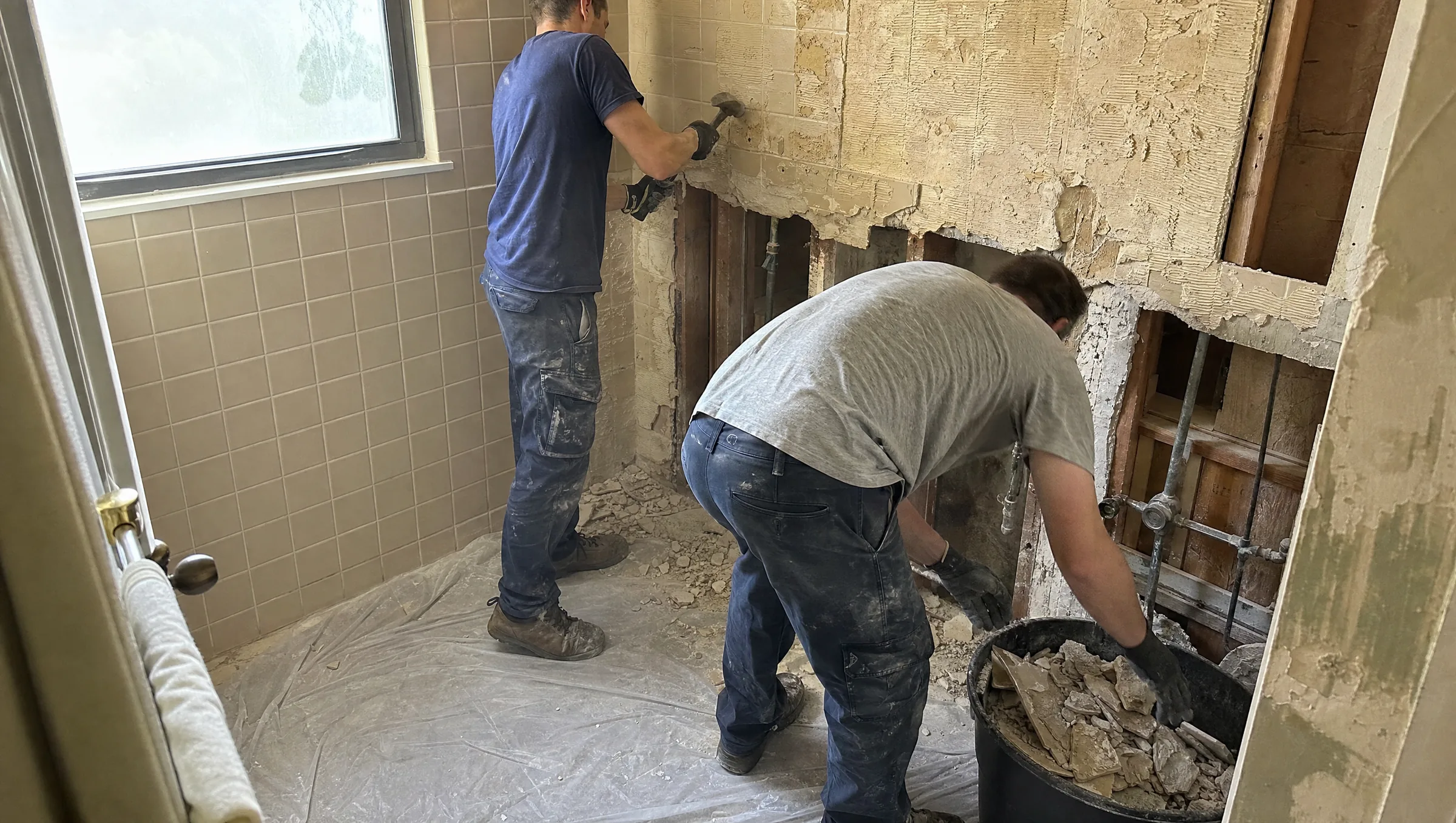
Shower demolition in the Orlando area typically costs $800 to $2,500 in 2026 when a professional removes a tile shower or tub surround down to the studs and hauls the debris away. Fiberglass and acrylic units sit at the low end. A mortar-bed shower floor, mud-set walls or a cast iron tub sit at the high end or above. Below we cover what the job involves, what changes the price, DIY versus hiring a pro, disposal, what we commonly find behind tile in Florida homes, and why older homes need an asbestos test before anyone swings a hammer.
Shower demolition cost at a glance
These are typical Orlando-area planning ranges for 2026, installed labor plus disposal. They vary with the size of the shower, how it was built, and what is behind the walls, so a written estimate after measuring is the only real number.
| Job | Typical range | Where it lands |
|---|---|---|
| Fiberglass or acrylic shower or tub unit, removal and haul-away | $800 to $2,500 | Low end; units cut into large pieces |
| Tile tub surround or tile shower walls to studs, haul-away | $800 to $2,500 | Middle of the range for a standard 5 ft alcove |
| Tile shower with mortar-bed floor, mud-set walls or cast iron tub | $2,500 and up | High end or above; heavy debris, more labor |
| Full bathroom demolition to studs and subfloor | $1,500 to $5,000 | Whole room, not just the shower |
If you are taking out more than the shower, such as the vanity, toilet, floor tile and drywall, look at our bathroom demolition cost guide, which covers the whole room.
What is involved in demolishing a shower
People picture a sledgehammer and an afternoon. A clean shower demolition that leaves the room ready to rebuild has more steps than that:
- Shut off and protect. Water off at the valve or main, drain covered so debris does not get into the line, and the toilet and vanity protected or removed.
- Dust control. Plastic sheeting over the doorway, floor protection along the path to the exit, and the HVAC return in or near the bathroom covered. Tile and mortar dust travels through a house fast.
- Remove glass and hardware. Shower door or glass panels, trim, shower head arm, valve trim, grab bars and shelves.
- Break out the tile and backer. Tile, mortar or thinset, and the backer board or drywall behind it come off in sections down to the studs.
- Remove the floor or pan. A fiberglass or acrylic base lifts out. A tile floor over a mortar bed has to be broken up and the old pan liner pulled. A tub has to be disconnected and carried out.
- Haul away. Debris is bagged or carried out to a truck or dumpster and taken for disposal.
- Inspect the opening. With the studs exposed we check framing, the bottom plate, the valve and supply lines, the drain and the slab before anything new goes in.
That last step is where demolition earns its cost. It is the only time you can see the condition of the plumbing and framing without opening finished walls later.
What drives the cost to demo a shower
How the shower was built
- Fiberglass or acrylic units are the quickest. They are cut into pieces and carried out, with little dust.
- Tile over cement board or drywall is the standard case. Tile and backer come off together in chunks.
- Mud-set (mortar-bed) walls are common in older Orlando-area homes. The tile is set in a thick layer of mortar over metal lath, which is heavy, slow to break and fills a dumpster quickly.
- Mortar-bed floors with a liner underneath are the norm for older site-built tile showers. Breaking up the bed by hand over a concrete slab takes time.
- Cast iron tubs often weigh 300 pounds or more. They are either broken up in place or carried out by several people, and either way they add labor.
Size and features
A small stall with three walls is a short job. A large walk-in shower with a bench, niches, a half wall or tile to the ceiling has more surface and more mortar to remove.
Access and protection
A second-floor bathroom, a narrow hallway, or a long path to the driveway adds carrying time. Homes with finished floors throughout need more protection between the bathroom and the door.
Disposal
Tile and mortar are heavy. Disposal is usually included in a contractor’s demolition price, but it is a real part of the cost, and weight is what drives it. A mortar-bed shower can produce several times the debris of a fiberglass unit.
DIY vs professional shower demolition
Removing a shower yourself is one of the more realistic DIY jobs in a remodel, with some caveats.
DIY can make sense when:
- The shower is a fiberglass or acrylic unit or a simple tile surround over backer board.
- The home was built after the early 1980s, or old materials have been tested and are clear.
- You have a way to haul and dispose of heavy debris.
- Your contractor agrees to it in writing and the rebuild schedule accounts for it.
Hire it out when:
- There is a mortar bed, mud-set walls or a cast iron tub.
- The home is pre-1980s and the materials have not been tested.
- You see signs of a leak: soft walls next to the shower, loose tile, stains on the other side of the wall, or a musty smell.
- The valve or supply lines are old, or you are not sure how to isolate the water.
The savings from DIY demolition are often smaller than expected. You still pay for tools, protective gear, bags and disposal, and you carry the risk. The common DIY mistakes we see are cutting into a supply line or the valve body, dropping mortar chunks into the open drain, cracking the slab or the tub drain box-out, and damaging the adjacent drywall, vanity or toilet that was supposed to stay.
If you plan to do your own demo, talk to your contractor first. Many prefer to do it, because the crew that rebuilds the shower wants to see the framing and plumbing as they come apart and to control the condition of the opening.
Disposal and haul-away
Shower debris is mostly tile, mortar, backer board, drywall and fixtures. A few practical points:
- Weight, not volume, is the issue. Tile and mortar fill a dumpster’s weight allowance long before they fill its space.
- Household trash pickup will not take it. Construction debris goes to a facility that accepts it, and Orange, Seminole and Osceola counties each have their own rules and drop-off sites for residents.
- Separate what you can. Metal (old valves, cast iron, steel tubs) can go to a scrap recycler. Glass doors are heavy and should be handled carefully.
- Ask what the price includes. A contractor’s demolition line should say whether haul-away and disposal are included. Ours are part of the scope.
What we find behind tile in Florida homes
Central Florida homes have a few patterns that show up again and again once the tile comes off.
- Drywall or “green board” behind tile. Many 1980s and 1990s homes have tile over moisture-resistant drywall with no waterproofing layer. It works until grout cracks let water in, and then the board softens behind tile that still looks fine.
- Rotted bottom plates and studs. The wood plate where the wall meets the slab is the first thing to rot from a slow leak. In Florida, damp wood near the slab is also where subterranean termites show up.
- Failed pan liners. Older mortar-bed shower floors depend on a liner under the mortar. When it tears or was never sloped correctly, water sits in the bed and wicks into the walls.
- Old supply lines and valves. Galvanized steel in older homes and polybutylene in many homes built between the late 1970s and mid 1990s. If either is behind the shower wall, this is the cheapest time to replace it.
- Slab drains and box-outs. Most Central Florida homes are slab-on-grade, so the shower or tub drain sits in a recess in the concrete. Moving the drain means cutting and trenching the slab, which is a different job from demolition.
- Mold on the back of the board. Florida humidity plus a slow leak is a reliable recipe. Small areas are cleaned and dried; larger ones need remediation before rebuilding.
When demolition uncovers water damage behind tile or rotted subfloor and framing, the repair often runs $2,000 to $8,000 or more, depending on how far it has spread. That is why we price demolition separately from what it might uncover and walk you through anything we find before fixing it.
Asbestos caution for older homes
If your home was built before the 1980s, assume the old shower could contain asbestos until a test says otherwise. Materials that can contain it include:
- Old floor tile and the black or dark adhesive (mastic) under it.
- Some older tile adhesives and grout.
- Drywall joint compound and textured wall or ceiling finishes.
- Old wall panels and some sheet flooring backing.
Asbestos is a hazard when it is broken, sanded or cut, which is exactly what demolition does. The safe sequence is:
- Have samples taken and tested by an accredited lab before demolition, not during it.
- If results are positive, have it removed by a licensed asbestos abatement contractor. Florida licenses asbestos consultants and contractors, and you can check a license at myfloridalicense.com.
- Only then start normal demolition.
The EPA has a plain-language overview of asbestos in the home that is worth reading if you own an older property. Homes built before 1978 may also have lead paint on bathroom walls and trim, which matters when walls are cut or sanded; see the EPA’s lead guidance for renovations. Testing and any abatement are separate from the demolition price above.
How shower demolition fits into the rest of the remodel
Demolition is usually a small slice of the total. For context, here is what the full projects typically cost in the Orlando area in 2026, with demolition included:
- Retiling shower walls in a standard 5 ft tub/shower alcove (demo, cement board, waterproofing, mid-range tile): $4,000 to $10,000.
- Tub-to-shower conversion: $10,000 to $20,000.
- New custom tile walk-in shower: $10,000 to $25,000. A curbless design adds roughly $2,000 to $6,000 for the slab recess, linear drain and extra waterproofing.
- Guest or hall bath, same layout: $12,000 to $25,000.
For a full shower budget, see our walk-in shower cost guide and our cost of retiling a shower breakdown. If you already know you want a new walk-in, our walk-in shower page explains how we plan and build them.
Questions to ask before you hire demolition
- Does the price include protection, haul-away and disposal?
- What happens if you find water damage, rot or mold? Will you stop and show me before repairing?
- Is the plan to go to the studs, or to keep any walls?
- Who handles the rebuild, and when does it start? An open shower should not sit for weeks.
- For older homes: has anyone tested for asbestos, and who is responsible for that?
- Will the valve and supply lines be replaced while the wall is open?
Planning a shower remodel in Orlando?
Demolition is the cheapest part of a shower project to get right and the most expensive to get wrong, because it decides what you find and how the rebuild starts. Prime Construction handles demolition as the first phase of our bathroom remodeling projects across Orange, Seminole, Osceola and Lake counties, including Orlando and nearby cities. Call (407) 404-3944 or request an estimate and we will measure, look at the shower, and give you a written price.