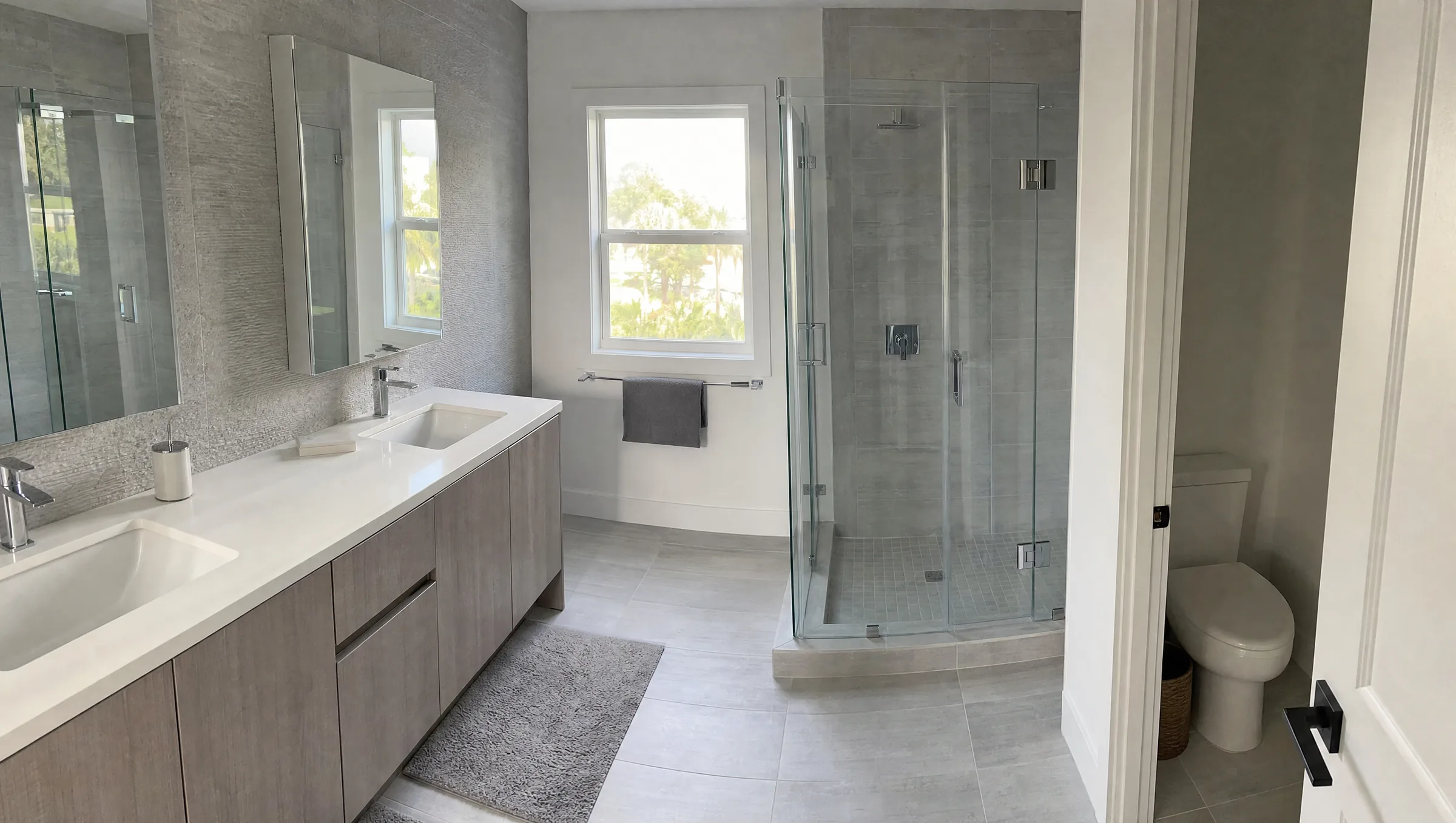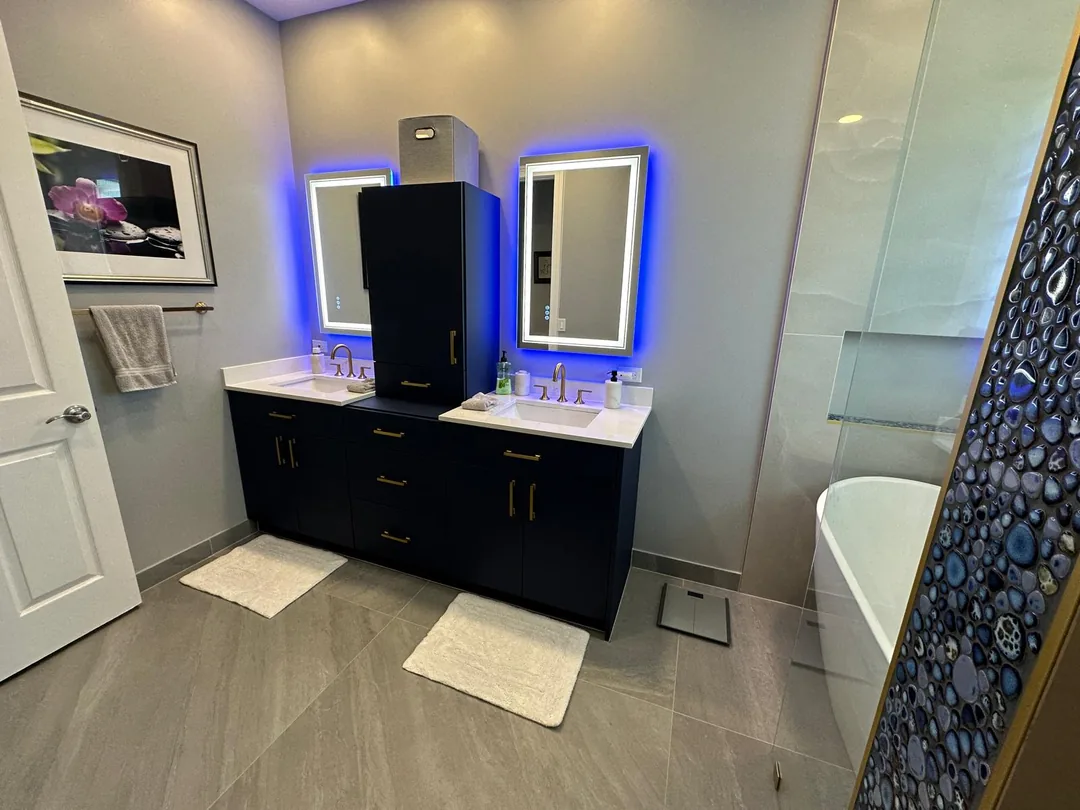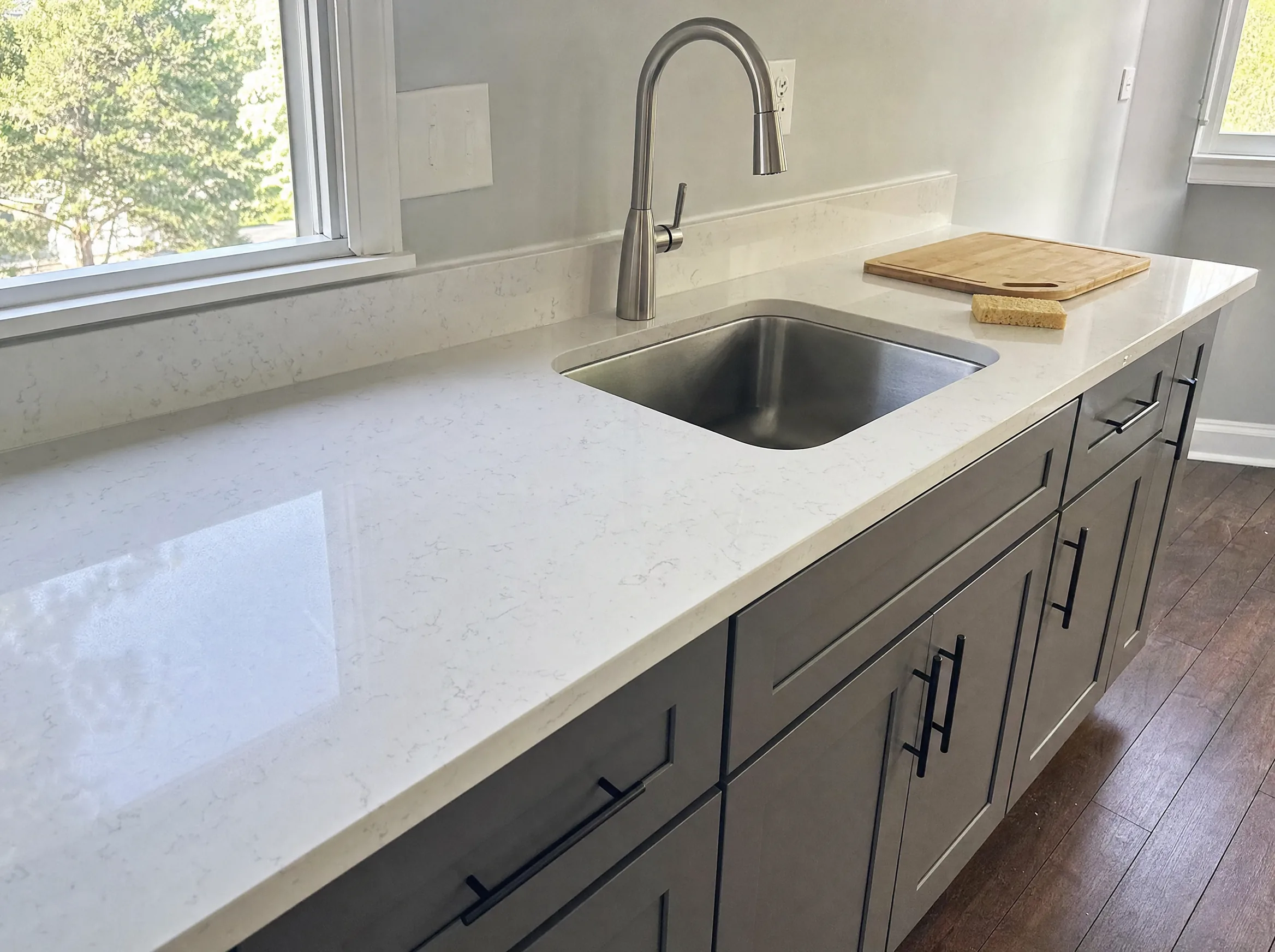

Bathroom
Bathroom Vanity Cabinets in Orlando: Built for Humidity
Bathroom vanity cabinets for Orlando humidity: plywood vs MDF vs particleboard, finishes, hardware, tops, single vs double, and how to make one last.
By the Prime Construction team Updated October 13, 2026 6 min read
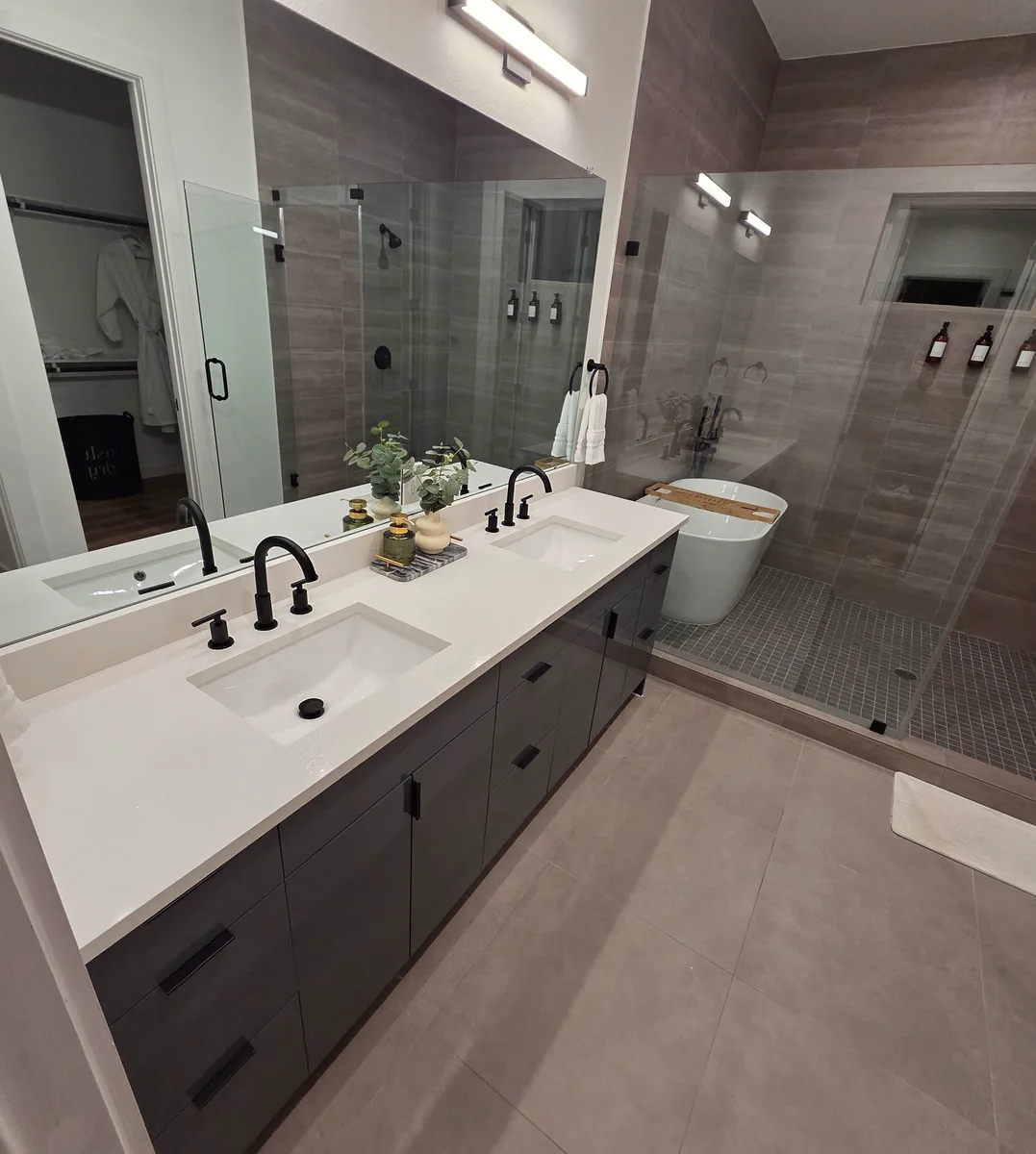
The bathroom vanity cabinets that last in Orlando are the ones built to handle humidity: plywood or solid wood boxes rather than particleboard, a finish sealed on every surface including the inside, rust-resistant hardware, and a top caulked tight to the wall. Style and size matter, but in a Florida bathroom construction is what decides whether a vanity looks the same in ten years or swells at the bottom in two. This guide covers materials, finishes, hardware, tops, single vs double layouts and the habits that keep a vanity dry.
Why vanities fail in Florida bathrooms
Central Florida is humid much of the year, and a bathroom adds steam from every shower. Vanities rarely fail from the top down. They fail from the bottom up:
- A slow drip from a supply line or the trap soaks the cabinet floor.
- Water on the counter runs down the face frame and into the toe kick.
- Steam condenses on and inside the cabinet when there is no ventilation.
- Mopping water wicks into the bottom edge of the sides.
The cabinet bottom and the lower edges of the sides are where swelling shows first. So the questions to ask when choosing bathroom vanity cabinets in Orlando are mostly about those surfaces.
Cabinet construction: what the box is made of
| Material | How it handles humidity | Where it fits | Watch out for |
|---|---|---|---|
| Plywood | Very good; layers resist swelling and hold screws | Boxes, sides, bottoms, backs | Edges need to be sealed or banded |
| Solid wood | Good with a sealed finish; expands and contracts with humidity | Face frames, doors, drawer boxes | Needs proper finish on all sides; can crack if sealed unevenly |
| MDF | Good when every edge is sealed; swells if water gets in | Painted doors and drawer fronts | Chips and unsealed edges let water in |
| Moisture-resistant MDF | Better than standard MDF | Painted doors, panels | Still needs a full finish |
| Particleboard | Poor; swells permanently when wet | Low-cost stock boxes | Cabinet bottoms under the sink fail first |
| PVC or other solid plastic | Does not absorb water | Wet areas, rental and utility baths | Fewer style and finish choices |
A common and durable combination for a bathroom is a plywood box with a solid wood face frame, solid wood or MDF doors, and plywood or solid wood drawer boxes. That costs more than an all-particleboard vanity, and it is where most of the price difference between vanities at the same size comes from.
Framed vs frameless
- Framed cabinets have a solid wood face frame on the front of the box. The frame stiffens the cabinet and gives the hinges something solid to mount to. This is the traditional and very common American style.
- Frameless cabinets have doors that cover the whole box with no frame showing. They give slightly more interior access and suit modern designs, but their quality depends heavily on the box material.
Finishes that resist moisture
- Factory-applied finishes are cured under controlled conditions and are usually tougher than a brushed-on finish.
- Finish on all six sides, including the interior, backs of doors and the cabinet bottom, keeps moisture from getting into raw wood or board.
- Painted cabinets need a durable topcoat. Chips at the edges of doors and drawers are where water gets into MDF.
- Stained wood shows wear less than paint and is easier to touch up.
- Thermofoil and laminate wraps resist water on their faces but can peel at the edges if heat and moisture break down the adhesive.
When you open a vanity in a showroom, look inside. A raw, unfinished interior is a sign the cabinet will absorb moisture from the inside out.
Hardware and fixtures
- Hinges. Concealed, adjustable, soft-close hinges keep doors aligned. Look for plated or coated steel that resists rust.
- Drawer slides. Full-extension, soft-close slides with a corrosion-resistant finish.
- Pulls and knobs. Stainless steel, solid brass or well-plated finishes hold up best. Cheap plating can pit in a humid bathroom.
- Faucet finishes. Brushed finishes hide water spots better than polished ones, which matters with Florida’s hard water in many areas.
Countertop choices for a humid bathroom
- Quartz. Non-porous and needs no sealing, which makes it the most common choice in remodels. See our quartz stone vanity top guide.
- Granite. Durable natural stone that needs periodic sealing.
- Marble. Beautiful, but porous and sensitive to acids; it needs regular sealing.
- Cultured marble. An integrated sink and top cast in one piece with a gel coat, budget friendly and seamless.
- Solid surface. Seamless and repairable.
Whatever the top, the caulk joints matter as much as the material. The bead where the backsplash meets the top and the wall is what keeps water from running down behind the cabinet. If you are setting a stone backsplash yourself, our guide on how to attach a marble backsplash to a vanity explains the right adhesive and caulking.
Sizes, and single vs double vanities
Standard widths are 24, 30, 36, 48, 60 and 72 inches, with depths around 21 inches (18 inch for narrow models) and heights of 30 to 36 inches with the top.
A single vanity suits guest baths, hall baths and primary baths under about 60 inches of wall. A 48 inch single gives a lot of counter, which many people prefer to two small sinks.
A double vanity makes sense when two people get ready at the same time and the wall is at least about 60 inches. On 72 inches you can fit a drawer bank between the sinks. Going from one sink to two means a new supply and drain rough-in, which raises installation cost.
Two separate vanities with a tall linen tower or a makeup counter between them work well in larger primary bathrooms.
Popular styles in Orlando remodels
- Shaker in white, gray, navy or green
- Flat-panel wood grain for a warmer, modern look
- Floating vanities that open the floor and suit large-format tile
- Furniture-style vanities in powder rooms
For more ideas on style, color and storage, see our bathroom cabinet design ideas.
Keeping a vanity dry
- Ventilate. Run an exhaust fan that vents outside, not into the attic, during every shower and for a while after.
- Maintain the caulk. Recaulk the top, backsplash and side joints when they crack or pull away.
- Replace old supply lines with braided stainless lines, and replace old shutoff valves that drip.
- Look under the sink a few times a year with a flashlight for drips or stains.
- Wipe the counter and face frame so water does not sit on edges.
- Keep a mat or tray under cleaning products in the cabinet.
Cost and installation
Vanity cabinets typically run about $300 to $3,000+, with custom above that. In the Orlando area, installation is about $300 to $900 for a like-for-like swap in 2026, and $1,000 to $2,500+ with new plumbing rough-in or wall changes. These are planning ranges, and a written estimate after measuring is the real number.
Choosing a vanity for an Orlando bathroom?
We help homeowners pick vanity cabinets built for Florida humidity, then measure, order, inspect and install them, including the top and plumbing. That is part of our bathroom vanity service and our bathroom remodels throughout Orange, Seminole, Osceola and Lake counties. Call Prime Construction at (407) 404-3944 or request an estimate.